By Raymond Colitt
BELEM, Brazil (Reuters) - Environmental police in Brazil seized the equivalent of 400 truckloads of wood in a major raid on illegal loggers, the government said on Wednesday, the latest effort to curb destruction of the Amazon rain forest.
During the surprise raid in Nova Esperanca do Piria, 120 miles east of Belem city, police shut down 13 logging companies and sawmills, and seized tractors, guns, and ammunition, Environment Minister Carlos Minc said during a visit to the remote jungle site. The owners fled the area.
The crackdown is the latest in a series of measures by the government to meet a new target of reducing destruction of the Amazon forest by 50 percent during the next decade.
"We are determined to slash deforestation -- this operation is a warning to illegal loggers," Minc told Reuters.
Brazil's government last year abandoned years of opposition to deforestation targets and is now under pressure to show the world community and critics at home that it can deliver, particularly ahead of a major climate change summit in Copenhagen in December.
Minc aims to reduce deforestation to about 3,700 square miles (9,500 sq km) in the 12 months through July, the lowest on record and down from 4,600 square miles (11,900 sq km) the year earlier.
Each year advancing loggers, ranchers and farmers cut huge swathes of forest in search of cheap land. …
Wednesday, April 8, 2009
Brazil cracks down on illegal loggers in Amazon
US Department of Interior moves to speed up wind energy
The U.S. Interior Department has recently released a report entitled "Survey of Available Data on OCS Resources and Identification of Data Gaps". The report, commissioned by Interior Secretary Ken Salazar and completed by the Minerals Management Service (MMS) branch of the department, outlines the energy resources available in the outer continental shelf (OCS) of the United States. Although the MMS is more well known for its role in auctioning off and granting permits for offshore oil and gas leases, the report is striking in that wind and wave energy potential receives top billing. The report (14 MB pdf) along with videos, podcasts, and presentation slides can be downloaded from the department's web site. …
US Department of Interior Moves to Speed Up Wind Energy
Tuesday, April 7, 2009
Dead malls: tragedy or opportunity?
Photo: Eastland Mall, Tulsa, OK (Tom Baddley of Lost Tulsa via Deadmalls.com)
Is the era of the enclosed shopping mall over? With changing consumer habits (such as increased online shopping) and the advent of “big-box” specialty stores and discounters like Home Depot, Target and Wal-mart, the deepening recession is merely delivering the coup de grĂ¢ce for hundreds of shopping malls across the U.S. For some, the end is coming none too soon.
As icons of excessive consumption and shortsighted urban planning, malls represent everything that has gone wrong with our car-based consumer culture. For others (especially in smaller towns), malls represent one of the last few sanctioned public spaces in our society where communities can gather. So what happens (or could happen) when a shopping mall dies? …
Dead Malls: Tragedy or Opportunity?
Financiers to plant farm... in downtown Detroit
Danny Bradbury, BusinessGreen, Tuesday 7 April 2009 at 09:22:00
Investors announce plans for giant urban agribusiness on 10,000 acres of rundown urban sprawl
A Michigan-based financial group has announced ambitious plans to turn large swathes of crime-ridden Detroit into urban farmland. In the long term, Hantz Group hopes to develop up to 10,000 acres of underutilised and vacant land in Downtown Detroit - almost a tenth of the city's 143-square-mile area - and turn it into a mixture of cash crop land, ornamental gardens, and riding trails.
The ambitious scheme will begin with a 70-acre purchase on the city's Lower East Side. Matt Allen, senior vice present for Hantz subsidiary Hantz Farms, who lives close to the proposed "phase one farm", said that the land has been targeted for its low density, and currently supports between zero and nine residents per acre. …
Financiers to plant farm... in downtown Detroit
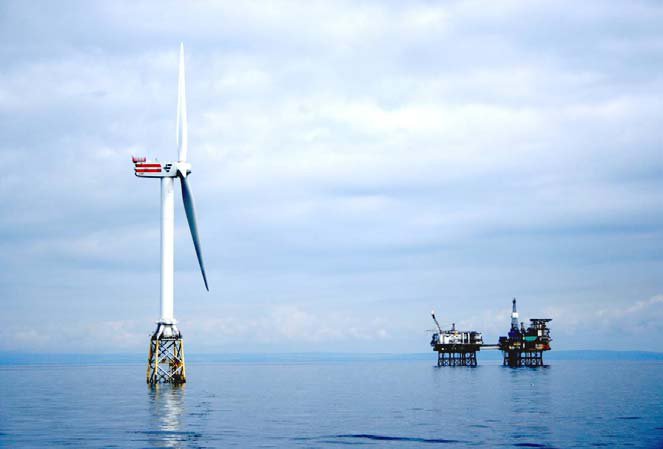
3,000 US coal power plants could be replaced by offshore wind power: Sec. of Interior
photo: pastalane via flickr
It's been nearly three years since TreeHugger covered a report asserting that offshore wind power could meet all the United States' electric needs, so when Secretary of Interior Ken Salazar talks up wind's great potential, my reaction is more along the lines of "finally!" more than anything else. The interesting thing is how Salazar is framing that 1 million megawatts of wind power potential—in terms of how many coal plants we could replace. …
3,000 US Coal Power Plants Could be Replaced by Offshore Wind Power: Sec. of Interior
Monday, April 6, 2009
Bacteria turn excess clean energy into methane for storage
Scientists at Pennsylvania State University have discovered a solution to the problem of reliable storage for alternative energy: a bacteria that can convert electricity to methane when combined with CO2.
Any surplus power from wind, solar, or tidal sources is fed into the bacteria and combined with CO2 from the atmosphere to create methane for storage. Methane is a clean-burning gas and 80% of energy fed into the process was retained at the end. ...
NEC Creates Online Game to Make Monitoring Power Consumption Fun

Image via Pink Tentacle
For some of us, monitoring our power consumption is already a lot of fun, simply because it's a personal challenge. But for most people, it's a chore worse than balancing the check book. That's precisely the reason so many start-ups are working diligently to come up with ways to make monitoring energy use simple, easy, and interesting. NEC, a company always looking for a greener way, has worked with BIGLOBE to come up with an online game that helps spice up tracking your consumption. …
NEC Creates Online Game to Make Monitoring Power Consumption Fun
Sunday, April 5, 2009
Port of Los Angeles to install 1.6 million square feet of rooftop solar panels (10 MW) over next five years

Though it can't claim the prize for the world's largest rooftop solar power array, the announcement by the Port of Los Angeles that it will be installed solar panels over 71,500 square feet of its World Cruise Center roof by the end of the year is decidedly impressive; what's even more impressive are the expansion plans in the works:
Initially $9 million will be spent building the initial phase of the project, which will generate 1 megawatt of electricity. That's impressive, but the next phases are when the real power starts mounting: Within five years and additional 1.16 million square feet of solar panels are planned to be installed, generating 10 megawatts of power. …
Black carbon linked to half of Arctic warming
Black carbon is responsible for 50 percent of the total temperature increases in the Arctic from 1890 to 2007 according to a study published in Nature Geoscience. Since 1890 the temperature in the Arctic has risen 1.9 degrees Celsius, linking black carbon to nearly an entire degree rise in Celsius or almost two degrees Fahrenheit.
Black carbon, a particulate air pollutant, is formed by-way of the incomplete combustion of fossil fuels, biofuels, and biomass. In places like Asia black carbon is usually produced by burning wood, coal, or cow dung for cooking or heating. In America and Europe, the use of diesel contributes heavily to black carbon. In total the destruction of forests and savannah by burning is the largest contributor of black carbon.
Black carbon is a double-whammy in terms of climate change: when in the atmosphere dark carbon particulates absorb sunlight and emit it as heat and after falling back to the earth black carbon can darken snow and ice, reducing their ability to reflect sunlight, thereby accelerating melting.
The study conducted by Drew Shindell of the NASA Goddard Institute for Space and Greg Faluvegi of Columbia University also found that the Arctic is most sensitive to black carbon produced within the middle latitudes of the Northern Hemispheres. A previous study had shown that 25 to 35 percent of the world's black carbon emissions come from China and India alone: two nations whose latitude lies at least partly in the sensitive zone.
“Climate conditions in the Arctic are rapidly deteriorating,” said Rafe Pomerance, president of Clean Air - Cool Planet. “This study reinforces the opportunity to control short-lived forcers of global warming including black carbon, methane and tropospheric ozone in order to slow the rate of warming in the Arctic. We cannot afford to allow the shrinkage of the Greenland ice sheet to accelerate.”
…
Black carbon linked to half of Arctic warming
Friday, April 3, 2009
Trash cooker helps poor and protects environment
By Barry Moody
NAIROBI (Reuters) - Kenya's huge and squalid slums don't have much of anything, except mountains of trash that fill rivers and muddy streets, breeding disease.
Now Kenyan designers have built a cooker that uses the trash as fuel to feed the poor, provide hot water and destroy toxic waste, as well as curbing the destruction of woodlands.
After nine years of development, the prototype "Community Cooker" is close to being rolled out in overcrowded refugee camps as well as slums around the country where the filth encourages diseases including cholera.
Invented by Nairobi architect Jim Archer, the cooker combines simplicity with the capacity to confront several environmental challenges simultaneously. The design was highly commended at the World Architecture Festival in Barcelona last year.
The prototype is working in Nairobi's Kibera slum, said to be the biggest in Africa, where around 800,000 people live.
Potatoes, rice and tea cook on some of the eight hotplates above a roaring, spitting furnace. A joint of meat roasts in an oven that can also be used for bread. …
Slum cooker protects environment, helps poor
Bird feathers produce color through structure similar to beer foam
This is just cool.
(Yale University) Some of the brightest colors in nature are created by tiny nanostructures with a structure similar to beer foam or a sponge, according to Yale University researchers. …
Bird feathers produce color through structure similar to beer foam
Australia's drought featured as an interactive media project
A drama series called Scorched, premised on a future scenario not terribly far off from possibility, features Australia's drought. It's a media project of giant proportions intended to drive audiences not only to watch, but also to interact. ...
Australia's Drought Featured as an Interactive Media Project
Germany: The world's first major renewable energy economy
Germany's Reichstag in Berlin is set to become the first parliamentary building in the world to be powered 100 percent by renewable energy. Soon the entire country will follow suit. Germany is accelerating its efforts to become the world's first industrial power to use 100 percent renewable energy -- and given current momentum, it could reach that green goal by 2050. …
Germany: The World's First Major Renewable Energy Economy
Robot scientists make real discoveries
UK researchers have developed a robot scientist that’s actually independently discovered new scientific knowledge.
The intelligent computer system called — appropriately enough — Adam discovered on its own “simple but new” scientific knowledge about the genomics of the baker’s yeast Saccharomyces cerevisiae, which scientists study as a model for more complex life forms. Adam’s developers used separate experiments to confirm the robot scientist’s hypotheses were both novel and correct.
“Because biological organisms are so complex it is important that the details of biological experiments are recorded in great detail,” said Ross King, who led the research at Aberystwyth University. “This is difficult and irksome for human scientists, but easy for Robot Scientists.” …
Robot scientists make real discoveries
Thursday, April 2, 2009
Nanotube technology transforms CO2 into fuel
Presence of surplus carbon dioxide in the atmosphere has taken center stage in the environmental science. All over the world people are worried about the excess amount of carbon dioxide in the atmosphere because it’s causing undesirable changes in the surroundings such as green house effect, global warming, melting of ice caps on the glaciers etc. So most of the environmental scientists are trying to minimize the amount of atmospheric carbon dioxide.
Researchers at Pennsylvania State University are working towards the same goal with the help of sunlight and titanium oxide nanotubes. These two elements, sunlight and titanium oxide nanotubes can transform carbon dioxide into methane. Methane can be utilized as energy source. It seems like double benefit. At one hand, we are reducing the quantity of carbon dioxide into the atmosphere and we would be less dependent on fossil fuels.
Craig Grimes of Pennsylvania State University is working on this project with Oomman Varghese, Maggie Paulose and Thomas LaTempa. Craig Grimes shares his views, “Right now there is lots of talk about burying carbon dioxide, which is ridiculous. Instead we can collect the waste out of the smoke stack, put it though a converter, and presto, use sunlight to change [CO2] back into fuel.”
The team of researchers arranged the nanotubes vertically somewhat on the lines of empty honeycomb. The top of the nanotubes is covered with a thin, reddish-brown layer of copper oxide. Here the copper and titanium oxide operate as catalysts. They increase the pace of chemical reactions that happen naturally. …
Nanotube Technology Transforms CO2 Into Fuel
Surge of college students pursuing 'clean energy' careers
Climate change is a concern among undergraduates, driving a surge of interest in science and engineering on campuses nationwide.
By Jim Tankersley
Reporting from Washington -- In what could be an encouraging sign of change in the long-standing shortage of Americans preparing for "clean energy" careers, the subject is suddenly hot on college campuses across the nation -- a surge of interest largely stimulated by the specter of global warming.
Concern about climate change is galvanizing more undergraduate students to turn toward a subject involving science and engineering, some educators suggest, in much the same way that Moscow's launching of the Sputnik space satellite jolted baby boomers to turn their eyes to the stars.
What remains uncertain is whether their enthusiasm for renewable energy will carry over into graduate school and lead them to swell the ranks of Americans with advanced science and engineering degrees.
"We have a shortfall of people to do cutting-edge research and do the innovations we need," said Vijay K. Dhir, dean of the engineering school at UCLA. But, he added, "the potential is there."
The rising interest in renewable energy is so new that it's not clearly reflected in the latest enrollment figures, educators say. But leaders from a range of schools -- including Arizona State University, Indiana University and the University of Colorado -- say energy and sustainability are the hottest topic for their students. …
Surge of college students pursuing 'clean energy' careers
Worst culprits from nine states contributing to Gulf of Mexico dead zone mapped by USGS
TreeHugger has covered the issue of ocean dead zones, in particular the annual 8,000 square mile one in the Gulf of Mexico, a number of times.
Now, the US Geological Survey has released new maps which pinpoint the watersheds within the Mississippi River Basin which most contribute to the problem:
The short version is that commercial fertilizer and animal manure in nine states—Illinois, Iowa, Indiana, Missouri, Arkansas, Kentucky, Tennessee, Ohio and Mississippi—causes 70% of the problem. But when you look at the maps the USGS has put out you can see that it's a bit more complicated than that. Those bright red areas show areas with the greatest contribution; it's really specific places within these states. …
Worst Culprits From Nine States Contributing to Gulf of Mexico Dead Zone Mapped by USGS


Germany's Reichstag in Berlin is set to become the first parliamentary building in the world to be powered 100 percent by renewable energy. Soon the entire country will follow suit. Germany is accelerating its efforts to become the world's first industrial power to use 100 percent renewable energy -- and given current momentum, it could reach that green goal by 2050. …
UK researchers have developed a