Wednesday, February 10, 2010

Another Blizzard: What Happened to Global Warming?

Quite a good piece from Time. Most of the media have missed the “extreme weather” angle of climate change.

A pedestrian crosses Fuller Place in Brooklyn, New York. Mary Altaffer / AP

By Bryan Walsh
Wednesday, Feb. 10, 2010

As the blizzard-bound residents of the mid-Atlantic region get ready to dig themselves out of the third major storm of the season, they may stop to wonder two things: Why haven't we bothered to invest in a snow blower, and what happened to climate change? After all, it stands to reason that if the world is getting warmer — and the past decade was the hottest on record — major snowstorms should become a thing of the past, like PalmPilots and majority rule in the Senate. Certainly that's what the Virginia state Republican Party thinks: the GOP aired an ad last weekend that attacked two Democratic members of Congress for supporting the 2009 carbon-cap-and-trade bill, using the recent storms to cast doubt on global warming. (See pictures of the massive blizzard in Washington, D.C.)

Brace yourselves now — this may be a case of politicians twisting the facts. There is some evidence that climate change could in fact make such massive snowstorms more common, even as the world continues to warm. As the meteorologist Jeff Masters points out in his excellent blog at Weather Underground, the two major storms that hit Philadelphia, Baltimore and Washington, D.C., this winter — in December and during the first weekend of February — are already among the 10 heaviest snowfalls those cities have ever recorded. The chance of that happening in the same winter is incredibly unlikely.

But there have been hints that it was coming. The 2009 U.S. Climate Impacts Report found that large-scale cold-weather storm systems have gradually tracked to the north in the U.S. over the past 50 years. While the frequency of storms in the middle latitudes has decreased as the climate has warmed, the intensity of those storms has increased. That's in part because of global warming — hotter air can hold more moisture, so when a storm gathers it can unleash massive amounts of snow. Colder air, by contrast, is drier; if we were in a truly vicious cold snap, like the one that occurred over much of the East Coast during parts of January, we would be unlikely to see heavy snowfall. (See pictures of the effects of global warming.)

Climate models also suggest that while global warming may not make hurricanes more common, it could well intensify the storms that do occur and make them more destructive. …

Another Blizzard: What Happened to Global Warming?

‘Climategate’ hack was sophisticated, launched from U.S. Eastern Seaboard

Can’t vouch for the accuracy of this report, but it sounds plausible. Perhaps a reader with network security experience can comment.

Hacking into the mind of the CRU climate change hacker

Figuring out who was behind the hack of the Climatic Research Unit (CRU) at the University of East Anglia requires some digital forensic skills – and an insight into the mindset of those who were trying to get at CRU’s files at the time.

Analysis by the Guardian and digital forensics experts suggests that an outside hacker gained access to a server at the UEA which held backups of CRU emails and a collection of staff documents. It also suggests the access occurred over a period of days, if not weeks, and was carried out from a computer based on the east coast of north America.

The release of hacked emails and documents came just months after climate change sceptics had filed more than 50 freedom of information requests querying the CRU’s refusal to release of raw data and program code during the summer.

Egged on by a group of sceptical bloggers, the requests almost all began with the words “I hereby make a EIR/FoI request in respect to any confidentiality agreements restricting transmission of CRUTEM data to non-academics involing the following countries.” Others sought “a copy of any digital version of the CRUTEM station data set that has been sent from CRU to Peter Webster and/or any other person at Georgia Tech”. All were refused under FoI exemptions because of commercial confidentiality.

Into that silence came the release of the archived “zip” file by someone with clear hacking skills: first they grabbed the files, then they broke into the RealClimate blog to upload the archive and prepare a draft post; then, when that was thwarted, they uploaded it to a Russian website, and posted links to it on climate sceptics’ blogs using web servers located in Saudi Arabia and Turkey.

That sequence of events led Sir David King, the government’s former chief scientist, to say that it must have been “carried out by a team of skilled professionals, either on behalf of a foreign government or at the behest of anti-climate change lobbyists in the United States”. But he quickly backed away from that statement, admitting he had no inside information.

The Guardian’s analysis shows that a small group of just four of the scientists from among the dozens employed at the CRU were targeted in the sifting of email. They are: Phil Jones, the head of the CRU; Professor Keith Briffa, who studied tree rings; Tim Osborn, who worked on climate modelling for modern and archaeological data; and Mike Hulme, director of the Tyndall Centre for Climate Change Research. All are either recipients or senders of all but 66 of the 1,073 emails, and almost all the rest are sent from mailing lists, such as the Met Office’s “scenarios” listing, to which at least one of the four would certainly belong. …

Hacking into the mind of the CRU climate change hacker

Sunday, February 7, 2010

Phil Jones: The leak was bad. Then came the death threats

Phil Jones said he and his colleagues were targeted by climate change sceptics

By Richard Girling

PHOTOGRAPHS of Professor Phil Jones show a handsome, smiling, confident-looking man. Not chubby exactly, but in blooming good health. The man who meets me at the University of East Anglia (UEA) looks grey-skinned and gaunt, as if he has been kept in prison.

In a way, he has. Since November last year he has been a prisoner of public opprobrium and a target of such vilification that was he was almost persuaded to comply with the wishes of those who wanted him dead.

In bare outline, the story of the Climatic Research Unit emails — “Climategate” — is well known. …

He now accepts that he did not treat the FoI requests as seriously as he should have done. “I regret that I did not deal with them in the right way,” he told The Sunday Times. “In a way, I misjudged the situation.”

But he pleads provocation. Last year in July alone the unit received 60 FoI requests from across the world. With a staff of only 13 to cope with them, the demands were accumulating faster than they could be dealt with. “According to the rules,” says Jones, “you have to do 18 hours’ work on each one before you’re allowed to turn it down.” It meant that the scientists would have had a lot of their time diverted from research.

A further irritation was that most of the data was available online, making the FoI requests, in Jones’s view, needless and a vexatious waste of his time. In the circumstances, he says, he thought it reasonable to refer the applicants to the website of the Historical Climatology Network in the US.

He also suspected that the CRU was the target of a co-ordinated attempt to interfere with its work — a suspicion that hardened into certainty when, over a matter of days, it received 40 similar FoI requests. Each applicant asked for data from five different countries, 200 in all, which would have been a daunting task even for someone with nothing else to do. It was clear to Jones that the attack originated from an old adversary, the sceptical website Climate Audit, run by Steve McIntyre, a former minerals prospector and arch climate sceptic.

“We were clearly being targeted,” says Jones. “Only 22% of the FoI enquiries were identifiably from within the UK, 39% were from abroad and 39% were untraceable.” What irked him was that the foreign applicants would all have had sources closer to hand in their own countries.

“I think they just wanted to waste our time,” he says. “They wanted to slow us down.”

It was pure irritation, he says, that provoked him and others to write the notorious emails apparently conspiring to destroy or withhold data. “It was just frustration. I thought the requests were just distractions. It was taking us away from our day jobs. It was written in anger.”

But he insists that no data were destroyed. “We have no data to delete. It comes to us from institutions around the world. We interpret data. We don’t create or collect it. It’s all available from other sources.”

If the leak itself was bad, the aftermath was the stuff of nightmares. Even now, weeks later, Jones seems rigid with shock. “There were death threats,” he says. “People said I should go and kill myself. They said they knew where I lived.” Two more death threats came last week after the deputy information commissioner delivered his verdict, making more work for Norfolk police, who are already investigating the theft of the emails.

The effect on Jones was devastating. The worldwide outcry plunged him into the snakepit of international politics. It was, he agrees, “a David Kelly moment”. …

The leak was bad. Then came the death threats

Saturday, February 6, 2010

U.S.-Mexico border fence plagued by glitches, long delays

AP

By JACQUES BILLEAUD
Associated Press Writer

PHOENIX (AP) - An ambitious, $6.7 billion government project to secure nearly the entire Mexican border with a "virtual fence" of cameras, ground sensors and radar is in jeopardy after a string of technical glitches and delays.

Having spent $672 million so far with little to show for it, Washington has ordered a reassessment of the whole idea. The outlook became gloomier this week when President Barack Obama proposed cutting $189 million from the venture.

Ultimately, the project could be scaled back dramatically, with the government installing virtual fences along a few segments of the nation's 2,000-mile southern boundary but dropping plans for any further expansion, officials said.

"The worst that happens is that we have a system which gives us some value but we conclude that it's not worth buying any more of it," said Mark Borkowski, the government's director of the project at U.S. Customs and Border Protection.

The first permanent segment of virtual fence - a 23-mile stretch near Sasabe, Ariz. - was supposed to be turned over to the Border Patrol by the main contractor, Boeing Co., for testing in January, but the handover has been delayed by problems involving the video recording equipment.

The Bush administration launched the project in 2005 to help secure the border against illegal immigrants, drug smugglers and other intruders. It was conceived as another layer of protection, in addition to thousands of Border Patrol agents and 650 miles of real fences.

The system was supposed to let a small number of dispatchers watch the border on a computer monitor, zoom in with cameras to see people crossing, and decide whether to send Border Patrol agents to the scene. Although there are sensors, cameras and radar at many points along the border, they are not connected to cover large expanses.

Originally, the virtual fence was supposed to be completed by 2011; that date has slipped to 2014, largely because of technical problems.

Among other things, the radar system had trouble distinguishing between vegetation and people when it was windy. Also, the satellite communication system took too long to relay information in the field to a command center. By the time an operator moved a camera to take a closer look at a spot, whatever had raised suspicion was gone. …

Border fence plagued by glitches, long delays

Technorati Tags:

Friday, February 5, 2010

Prehistoric patterns: A dinosaur gets color from head to feathery tail

Anchiornis huxleyi

Last week, researchers announced that they had been able to place, for the first time, original colors on a dinosaur—painting in striking stripes on Sinosauropteryx's tail based on new evidence of pigment particles. Today, another team reports that they have decoded the colors of a different dino from head to tail.

The findings, which will be published February 5 in Science, paint a detailed picture of birdlike Anchiornis huxleyi, which has been extinct for some 150 million years and was first described in December 2008.

To establish this dinosaur's overall coloration, the researchers, led by Quanguo Li of the Beijing Museum of Natural History, studied 29 feather samples under a scanning electron microscope. And what they found was quite a dramatic little dinosaur.

"This was no crow or sparrow, but a creature with a very notable plumage," Richard Prum, a professor of ornithology, ecology and evolutionary biology at Yale University, said in a prepared statement. Nevertheless, the coloring isn't fully unfamiliar. Quite to the contrary, as the authors noted in the study, it is "strikingly similar to various living birds including domesticated fowl." …

Prehistoric patterns: A dinosaur gets color from head to feathery tail

Utah Legislature panel votes against ‘climate data conspiracy’ – BYU scientists defend climate science

Lawmaker: Climate change just ruse to control population

State Rep. Mike Noel, left, says climate change regulation is a bad idea. (Jim Urquhart / The Salt Lake Tribune)

By Judy Fahys

The Salt Lake Tribune
Updated: 02/05/2010 11:26:26 AM MST

Rep. Mike Noel, the Legislature's chief climate-change skeptic, declared Thursday that global warming is a conspiracy to control world population.

The House Natural Resources Committee then approved a resolution that expresses the Utah Legislature's belief that "climate alarmists' carbon dioxide-related global warming hypothesis is unable to account for the current downturn in global temperatures."

The resolution, sent to the House on a 10-1 vote, would urge the Environmental Protection Agency to drop plans to regulate the pollution blamed for climate change "until a full and independent investigation of the climate data conspiracy and global warming science can be substantiated."

"We're at the breaking point," said Rep. Kerry Gibson, the resolution's sponsor, who warned that the supply of safe and affordable food is already threatened by over-regulation.

Eleven Brigham Young University scientists defended climate science in a point-by-point rebuttal to parts of the resolution and urged the panel in an e-mail to reject the measure.

"Even if all the political solutions proposed so far are flawed," they said, "this does not justify politicians attacking the science that indicates there is almost certainly a serious problem." …

Lawmaker: Climate change just ruse to control population

Thursday, February 4, 2010

Hubble detects mysterious spaceship-shaped object traveling at 11,000 mph

Hubble has discovered a mysterious X-shaped object traveling at 11,000mph. NASA says that P/2010-A2 may be a comet, product of the collision between two asteroids. Or a Klingon Bird of Prey. Either way, UCLA investigator David Jewitt is excited:

This is quite different from the smooth dust envelopes of normal comets. The filaments are made of dust and gravel, presumably recently thrown out of the nucleus. Some are swept back by radiation pressure from sunlight to create straight dust streaks. Embedded in the filaments are co-moving blobs of dust that likely originated from tiny unseen parent bodies.

OK, David, we will believe you until Jerry Bruckheimer finish his next movie, in which a "comet" suddenly stops, turns to Earth, and starts firing anti-matter rays against our underpants.

The weirdest thing, however, is not only the prettyful X-shaped debris pattern, but the fact that its 460-foot-wide nucleus is outside the dust halo and separated from the trail. This behavior is something which has never been seen before in a comet or any other solar-system-swooshing object.

Hubble Detects Mysterious Spaceship-Shaped Object Traveling at 11,000MPH

Technorati Tags:

According to new survey, Americans support strong climate, energy policies

(George Mason University) Despite a sharp drop in public concern over global warming, Americans -- regardless of political affiliation -- support the passage of federal climate and energy policies, according to the results of a national survey released today by researchers at Yale and George Mason universities.

The survey found support for:

  • Funding more research on renewable energy, such as solar and wind power (85 percent)
  • Tax rebates for people buying fuel-efficient vehicles or solar panels (82 percent)
  • Establishing programs to teach Americans how to save energy (72 percent)
  • Regulating carbon dioxide as a pollutant (71 percent)
  • School curricula to teach children about the causes, consequences, and potential solutions to global warming (70 percent)
  • Signing an international treaty that requires the United States to cut emissions of carbon dioxide 90 percent by the year 2050 (61 percent)
  • Establishing programs to teach Americans about global warming (60 percent).

"Surprisingly, majorities of both Republicans and Democrats support many of these policies, including renewable energy research, tax rebates, regulating carbon dioxide, and expanding offshore drilling for oil and natural gas," said Anthony Leiserowitz, director of the Yale Project on Climate Change. "Further, majorities in both parties support returning revenues from a cap-and-trade system to American households to offset higher energy costs, perhaps opening a pathway for Congressional action." …

Sixty-two percent said the United States should make a "medium-" to "large-scale" effort to reduce global warming, even if doing so has "moderate" or "large" economic costs. This represents, however, a 12-point decline since the fall of 2008. Sixty-nine percent said global warming should be a "medium" priority to "very high" priority of President Obama and Congress, while approximately half want local, state, and federal officials to do more to address the issue. Both of those results represent 10- to 15-percentage-point declines since the fall of 2008.

"Most Americans continue to want their elected leaders at all levels of government to get on with the job of developing solutions to global warming," said Edward Maibach, director of the Center for Climate Change Communication at George Mason University. "Two out of three also want to see ordinary citizens like themselves doing more about global warming." …

According to new survey, Americans support strong climate, energy policies

How the 'climategate' scandal is bogus and based on climate sceptics' lies

Claims based on email soundbites are demonstrably false – there is manifestly no evidence of clandestine data manipulation

Tree rings have historically correlated well with changes in temperature, but that relationship has broken down in the past half century. The reasons are still debated among scientists. Photograph: Getty

By Fred Pearce, www.guardian.co.uk, Monday 1 February 2010 18.04 GMT

…The Alaskan governor Sarah Palin, in the Washington Post on 9 December, attacked the emailers as a "highly politicised scientific circle" who "manipulated data to 'hide the decline' in global temperatures". She was joined by the Republican senator James Inhofe of Oklahoma – who has for years used his chairmanship of the Environment and Public Works Committee to campaign against climate scientists and to dismiss anthropogenic global warming as "the greatest hoax ever perpetrated on the American people". During the Copenhagen climate conference, which he attended on a Senate delegation, he referred to the Jones's "hide the decline" quote and said: "Of course, he means hide the decline in temperatures."

This is nonsense. Given the year the email was written, 1999, it cannot be anything else. At that time there was no suggestion of a decline in global temperatures. The previous year was the warmest on record, coming on top of a run of record warm years in the warmest decade of the century. It is only in the decade since that the rise in temperatures has slackened, due to natural cycles of variability.

The full email from Jones says: "I've just completed Mike's Nature trick of adding in the real temps to each series for the last 20 years (ie from 1981 onwards) and from 1961 for Keith [Briffa]'s, to hide the decline." The decline being referred to was an apparent decline in temperatures shown in analysis of tree rings. Tree rings have historically correlated well with changes in temperature, but that relationship has broken down in the past half century. The reasons are still debated among scientists.

The "trick" was a graphic device used by Mann in a 1998 paper in Nature to merge tree ring data from earlier times with thermometer data for recent decades. He explained it in the paper. Jones was repeating it in another paper. "This is a trick only in the sense of being a good way to deal with a vexing problem," Mann told the Guardian. …

Several other soundbites were subject to perverse or dishonest interpretations by commentators. Patrick Michaels, the climatologist and heavyweight polemicist for the rightwing Cato Institute published a long op-ed piece in the DC Examiner, slamming Mann for an email quote about keeping sceptics' papers out of the IPCC report "even if we have to redefine what the peer-reviewed literature is". Michaels is an old foe of Mann's, but this genuinely damaging statement was actually made by Jones.

In another case George Will, celebrated in some circles as an intellectual, told ABC's This Week programme that Mann had said in an email that he wished to "delete, get rid of, the medieval warming period". No such words appear anywhere in the emails. What Mann actually said was that "it would be nice to try to 'contain' the putative 'MWP'". Some bloggers suggested this amounted to extinguishing it from the data record. But an intellectual like Will should have known that, in this context, "contain" means to understand its dimensions – how warm it was and how long it was. Mann explained as much to anyone who asked. Verdict: not guilty. …

How the 'climategate' scandal is bogus and based on climate sceptics' lies

Wednesday, February 3, 2010

Penn State exonerates climate scientist -- conspiracy theorist cries ‘whitewash’

From DeSmogBlog:

Steven Milloy. FOX News

Penn State University’s inquiry into climate scientist Dr. Michael Mann’s conduct surrounding the emails stolen from the Climate Research Unit at East Anglia University concluded there is no evidence to substantiate the claims made by the right-wing media against Mann.

The Penn State panel cleared Dr. Mann of any wrongdoing in three of the four areas it probed, recommending only that a separate panel of faculty members pursue a follow-up investigation into the allegation that Dr. Mann "engaged in, directly or indirectly, any actions that seriously deviated from accepted practices within the academic community for proposing, conducting or reporting research or other scholarly activities." …

Pete Altman over at NRDC’s Switchboard blog notes: “That’s about as close to a silver bullet as you are going to find in terms of shooting down the conspiracy theorists who are touting their ‘climategate’ nonsense.”

Altman notes that Professor Mann has “has been the victim of an extended vicious and unfounded smear campaign.”

But none of that seems to sink into the brain of the self-titled “Junkman,” Steven Milloy, who instead screams “whitewash” and accuses Penn State of ignoring allegations that were never under question. …

Climate Skeptics Try To Spin Penn State Exoneration of Dr. Michael Mann Into “Whitewash”

New theory proposes life began in deep-sea hydrothermal vents

In rejecting the soup theory the researchers turned to the Earth's chemistry to identify the energy source which could power the first primitive predecessors of living organisms: geochemical gradients across a honeycomb of microscopic natural caverns at hydrothermal vents. These catalytic cells generated lipids, proteins and nucleotides which may have given rise to the first true cells. (Credit: Photograph by Dudley Foster from RISE expedition, courtesy of William R. Normark, USGS)

ScienceDaily (Feb. 3, 2010) — For 80 years it has been accepted that early life began in a 'primordial soup' of organic molecules before evolving out of the oceans millions of years later. Today the 'soup' theory has been over turned in a pioneering paper in BioEssays which claims it was the Earth's chemical energy, from hydrothermal vents on the ocean floor, which kick-started early life.

"Textbooks have it that life arose from organic soup and that the first cells grew by fermenting these organics to generate energy in the form of ATP. We provide a new perspective on why that old and familiar view won't work at all," said team leader Dr Nick lane from University College London. "We present the alternative that life arose from gases (H2, CO2, N2, and H2S) and that the energy for first life came from harnessing geochemical gradients created by mother Earth at a special kind of deep-sea hydrothermal vent -- one that is riddled with tiny interconnected compartments or pores." …

In rejecting the soup theory the team turned to the Earth's chemistry to identify the energy source which could power the first primitive predecessors of living organisms: geochemical gradients across a honeycomb of microscopic natural caverns at hydrothermal vents. These catalytic cells generated lipids, proteins and nucleotides which may have given rise to the first true cells.

The team focused on ideas pioneered by geochemist Michael J. Russell, on alkaline deep sea vents, which produce chemical gradients very similar to those used by almost all living organisms today -- a gradient of protons over a membrane. Early organisms likely exploited these gradients through a process called chemiosmosis, in which the proton gradient is used to drive synthesis of the universal energy currency, ATP, or simpler equivalents. Later on cells evolved to generate their own proton gradient by way of electron transfer from a donor to an acceptor. The team argue that the first donor was hydrogen and the first acceptor was CO2.

"Modern living cells have inherited the same size of proton gradient, and, crucially, the same orientation -- positive outside and negative inside -- as the inorganic vesicles from which they arose" said co-author John Allen, a biochemist at Queen Mary, University of London.

"Thermodynamic constraints mean that chemiosmosis is strictly necessary for carbon and energy metabolism in all organisms that grow from simple chemical ingredients [autotrophy] today, and presumably the first free-living cells," said Lane. "Here we consider how the earliest cells might have harnessed a geochemically created force and then learned to make their own." ...

New Research Rejects 80-Year Theory of 'Primordial Soup' as the Origin of Life

Technorati Tags:

Poll shows unprecedented global concern about climate change

Poll shows rising concern for climate change (BBC / GlobeScan)

...a new poll shows growing concern for climate change; nearly two-thirds say climate is “very serious” problem. Despite the fact that recent polling numbers indicate a decrease in public concern for climate change in the United States, global concern is at its highest level since 1998, according to a new poll released on Monday.

According to the GlobeScan/BBC World Service poll, nearly two-thirds of people now consider climate change is a “very serious” problem. This year’s results indicate the greatest overall concern for the climate since GlobeScan began international tracking in 1998.

“The poll shows strong worldwide support for action on climate change, in spite of the recession,” said GlobeScan chairman Doug Miller.

The poll was conducted between June and October and represents the opinions of of over 27,000 citizens in 23 countries. GlobeScan has regularly polled 13 of the countries included in the survey, for the past 11 years.

Poll Shows Unprecedented Global Concern About Climate Change

World Bank, World Development Report 2010:

A new poll of 15 nations, most of them in the developing world, finds that majorities of the people canvassed want their governments to take steps to fight climate change, even if that entails costs. People signaled they would support public measures to limit greenhouse gas emissions and step up adaptation measures. For example, respondents would support higher fuel efficiency standards for cars, preserving or expanding forests, and extending funding to vulnerable countries so they can develop hardier crops suited to more severe climates. … Polling was conducted among 13,518 respondents in 15 nations—Bangladesh, China, Egypt, France, India, Indonesia, Iran, Japan, Kenya, Mexico, Russia, Senegal, Turkey, the United States, and Vietnam. …

Public Attitudes Toward Climate Change: Findings from a Multi-Country Poll

Scientist in climate row speaks out

Academic breaks silence to deny covering up flawed data about global warming  

http://www.uea.ac.uk/polopoly_fs/1.4679.1162927289!jones_p.jpgBy Kunal Dutta

Wednesday, 3 February 2010

The scientist at the centre of the "Climategate" controversy last night denied claims that he covered up flawed data about rising world temperatures.

Professor Phil Jones, the former head of the University of East Anglia's climatic research unit, said the 20-year-old study questioned by sceptics "stood up to scrutiny" and was corroborated by more recent work. The UEA's research centre has been under fire from climate sceptics since 13 years of emails were stolen from its servers and posted online in November in the run-up to the UN climate talks in Copenhagen.

One newspaper claimed that Professor Jones deliberately withheld information from Douglas Keenan, a *independent student of climate change, who used a freedom of information request to query data from Chinese weather stations used in the 1990 study on global warming.

Professor Jones said he was certain that the study, which drew on 42 urban and 42 rural sites, was correct because it was validated by the new data. "I am confident.... the site movements that might have taken place at some of the sites were not that important to affect the average of the 42 sites," he said. …

"I think it's very important and it's potentially very serious for the future of mankind in decades to come."

Insisting that he "wholeheartedly" stood by the part of the IPCC's report to which he contributed, the academic added: "The work we do at the UEA is only a small part of climate science, Thousands of climate scientists around the world support our results." …

Scientist in climate row speaks out

Monday, February 1, 2010

Russian police raid environmental group working to protect Lake Baikal

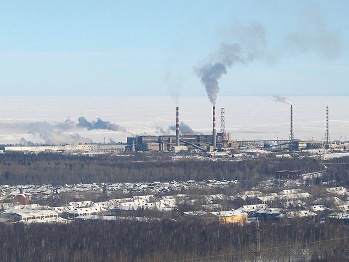
Baikalsk Paper and Pulp Mill.  

By Jeremy Hance
mongabay.com
February 01, 2010

Russian police have raided the Baikal Environmental Wave organization reports the Moscow Times. Police seized several computers, citing the reason for the raid to uncover the use of unlicensed software.

A member of the group, however, linked the raid to its public stance against reopening the Baikalsk Paper and Pulp Mills on Lake Baikal, which closed due to pollution concerns two years ago.

"All of our programs are licensed. They confiscated the computers without checking the license documents, saying they didn't have experts to look at them," Galina Kulebyakina, a member of Baikal Environmental Wave, told The Moscow Times.  …

Russian police raid environmental group working to protect Lake Baikal

Technorati Tags: ,

Pentagon calls climate change a destabilizing geopolitical force

US army humanitarian relief photo 

In addition to security concerns, global warming is cited as leading to more need for the military to assist civilian agencies in humanitarian relief efforts. Photo: US Army via flickr.

The fact that deep concern about global warming isn't just restricted to tree-hugging types but also extends to hard-headed military planners is nothing new, but here's a timely reminder of that: The Department of Defense's Quadrennial Defense Review 2010 has just been released, and lo and behold the DoD calls it a destabilizing force in the world, an accelerant of conflict:

Click on the link above for a full copy of the report, but here are some excerpts from the part about climate change. They start in earnest on page 107, for those interested.

The Review says climate change will affect DoD operations in two broad ways: 1) shaping the operating environment as well as the types of missions and roles it takes; and 2) directly impacting facilities and military capabilities.

Global Warming to Have Significant Geopolitical Impacts

Regarding the first, the report says that "climate-related changes are already being observed in every region of the world, including the United States and its coastal waters."

Heavier downpours, rising sea levels, retreating glaciers, thawing permafrost, longer growing seasons and ice-free seasons are all listed as presently occurring. These will have "significant geopolitical impacts around the world, contributing to poverty, environmental degradation, and further weakening of fragile governments." ...

Pentagon Calls Climate Change a Destabilizing Geopolitical Force

Sunday, January 31, 2010

High speed rail finally coming to the US: A look at the plans (video)

But where’s the LA-to-New York line?

High speed rail plans. Wired

 Image via Wired

Yes, high speed trains are finally coming to the United States. It's been a long time coming, but thanks in part to funding from last years stimulus bill, 13 high speed rail lines may be up and operating as soon as 2025. Yes, in less than fifteen years, you may be able to take a bullet train from San Diego to San Francisco, or from St. Louis to Chicago. It's about time.

Nearly an entire year ago, we first reported on Obama allotting $8 billion for rail funding in his stimulus bill, and some $5 billion more in his budget. Now, working with states, which are often matching those funds, Obama has finally unveiled how he plans on bringing the US up to speed (I refuse to apologize for that pun, btw).

Wired has a must-read feature that goes in depth into the future of American high speed rail, both in its current issue on the stands, and online. It's called Superfast Bullet Trains are Finally Coming to the US, and it's right. The graphic above shows the map of where the planned lines are going. …

High Speed Rail Finally Coming to the US: A Look at the Plans (Video)

Technorati Tags:

Genetically modified forest planned for U.S. Southeast

Maybe they can relocate Australia’s endangered koalas to these forests.

International Paper Co. and MeadWestvaco Corp. are planning to transform plantation forests of the southeastern United States by replacing native pine with genetically engineered eucalyptus

PINE GONE: Native pine trees could be sent to pasture in place of eucalyptus, pictured here. ISTOCK / MALIKETH

By Paul Voosen

Genetic engineering is coming to the forests.

While the practice of splicing foreign DNA into food crops has become common in corn and soy, few companies or researchers have dared to apply genetic engineering to plants that provide an essential strut of the U.S. economy, trees.

But that will soon change. Two industry giants, International Paper Co. and MeadWestvaco Corp., are planning to transform plantation forests of the southeastern United States by replacing native pine with genetically engineered eucalyptus, a rapidly growing Australian tree that in its conventional strains now dominates the tropical timber industry.

The companies' push into genetically modified trees, led by their joint biotech venture, ArborGen LLC, looks to overcome several hurdles for the first time. Most prominently, they are banking on a controversial gene splice that restricts trees' ability to reproduce, meant to allay fears of bioengineered eucalyptus turning invasive and overtaking native forests.

If such a fertility control technology -- which has come under fire in farming for fear seed firms will exploit it -- is proven effective, it could open the door to many varieties of wild plants, including weedy grasses, to be genetically engineered for use in energy applications like biomass and next-generation biofuels without fear of invasiveness.

The use of such perennial plants -- so named because, unlike annual farm crops, they live and grow for many years -- has long interested business and government, including the Energy Department, which has collaborated with ArborGen. The plants, which include many grasses targeted for cellulosic ethanol, can be harvested when needed and, given their hardiness, grow on marginal land.

Yet many questions remain about the effectiveness of the fertility system used by ArborGen, which, according to leading scientists, has never been rigorously studied in multiyear trials to prove that it can effectively control plants' spread. More research must be conducted before such systems are relied upon to restrict pollen and seed spread, they say.

Despite these calls, ArborGen has been seeking government deregulation of its eucalyptus, which is primarily engineered to resist freezing temperatures, since 2008. If successful, ArborGen would likely revolutionize the timber industry and the Southern landscape by becoming the first company to roll out bioengineered trees on a massive scale, observers say. …

Genetically Modified Forest Planned for U.S. Southeast

Technorati Tags: